
Why don’t we have an Indy opposition AND an indy government!
This is probably the longest article that I have put to paper, you may find it a ramble into the backrooms of my mind, which is not a great thing at the best of times! However I am trying to fathom why we independence people are so very polarised POLITICALLY when it comes to independence and why we have ignored the ability for us to vote in a bunch of Independence MSPs for to be seated in the opposition seats. Would it not be better to have Indy MSPs in the opposition as well as the government. Would it not be better to have the ability to put through legislation that benefits scotland with a largers concensus of Indy MSP accross the chamber? This journey opened up a rabbit hole that I poured a can of worms into. To me it makes sense to have a minority government with a larger Indy population in oppoistion to work together and marginalise the Unionist opposition. It will now be my goal to convince as many people as possible to believe the same, because until we get over ourselves politically and come together as a movement we shall remain in a position where nothing moves forward towards the goal of our liberty.
Common Goal of Independence
The primary goal of our Independence movement (independence itself) transcends individual party lines and political ideologies. At the heart of this movement lies a collective desire for self-determination and the right to shape our own future. The Scottish National Party (SNP), the Greens, and Alba may differ in their policies and approaches, but they are united by a common objective: to achieve independence for Scotland. This shared goal should be the cornerstone of our strategy, guiding us to set aside differences and work together towards a free and self-governing Scotland.
Historically, unity has been a critical factor in successful independence movements worldwide. The American Revolution, the struggle for Indian independence, and the anti-apartheid movement in South Africa all demonstrate the power of a united front. When diverse groups with a common cause come together, they create a formidable force that can overcome even the most entrenched opposition. These historical examples should serve as a powerful reminder of what we can achieve if we prioritize our shared objective over individual party interests.
In contrast, a divided approach weakens our cause and provides opportunities for unionist parties to exploit these divisions. The British Empire historically used divide and conquer tactics to maintain control over its colonies, and the UK government continues to use similar strategies to undermine the Scottish independence movement. The media often plays a role in this, highlighting and exaggerating differences within the pro-independence camp to create an illusion of disunity. For example, coverage often focuses on disagreements between the SNP and Alba or portrays the Greens as being at odds with other pro-independence parties. This narrative serves to weaken our collective resolve and distract from the ultimate goal of independence.
To counteract this, it is essential to recognize that achieving independence is the priority. Once independence is secured, there will be ample opportunity for political diversity to flourish. In a free and independent Scotland, the SNP, Greens, Alba, and other parties can compete on a level playing field, each offering their vision for the future. However, this political diversity can only thrive if we first achieve the fundamental goal of independence. Therefore, setting aside personal and party differences for the greater good is not only pragmatic but necessary.
The importance of unity cannot be overstated. By focusing on our common goal, we can build a stronger, more cohesive movement that is capable of overcoming the challenges ahead. This means putting aside any animosity or rivalry between parties and individuals and instead working collaboratively to achieve the greater good. It involves recognizing that the differences between the SNP, Greens, and Alba are minor compared to the monumental task of securing independence. Each party brings unique strengths and perspectives to the table, and by leveraging these, we can create a more effective and resilient independence movement.
The path to independence requires a collective effort, where the common goal takes precedence over individual party agendas. The historical success of united independence movements provides a clear blueprint for us to follow. By emphasizing our shared objective, countering divisive tactics, and prioritizing unity, we can build a movement strong enough to achieve independence for Scotland. Post-independence, the political landscape can and will accommodate a diversity of views and policies, but until then, unity is our most powerful tool. It is time to set aside our differences and come together for the future of Scotland.
Strategic Voting for Maximum Impact
Every vote counts when it comes to delivering pro indy MSPs to Holyrood, and understanding the mechanics of the voting system can significantly amplify the impact of our collective efforts. The D'Hondt voting system, which is used for elections to the Scottish Parliament, plays a crucial role in how seats are allocated. To make the most of our votes, it is essential to grasp how this system works and how we can use it strategically to maximize pro-independence representation in Holyrood.
The D'Hondt system is a form of proportional representation designed to allocate seats more fairly based on the number of votes each party receives. In Scotland, voters have two votes: one for their constituency MSP (Member of the Scottish Parliament) and one for a regional list. The constituency vote is straightforward, with the candidate who receives the most votes winning the seat. However, the regional list vote is where strategic voting can make a significant difference.
The regional list vote is used to allocate additional seats in a way that compensates for any disproportionality in the constituency results. After the constituency seats are allocated, the D'Hondt formula is applied to the regional list votes to distribute the remaining seats. This formula takes into account the number of seats a party has already won, ensuring that the final allocation of seats more accurately reflects the overall vote share.
Here's where strategic voting comes into play. If independence supporters vote for the SNP in the constituency vote and for Alba or the Greens on the regional list, we can maximize the number of pro-independence seats in Holyrood. The SNP is likely to win a significant number of constituency seats, which means that under the D'Hondt system, they are less likely to gain additional seats from the regional list. By voting for Alba or the Greens on the regional list, we can ensure that these pro-independence parties gain more seats, boosting the overall pro-independence majority.
To illustrate this, let's consider the potential outcomes. In the 2021 Scottish Parliament election, if all SNP regional votes had gone to Alba, the pro-independence seat count would have increased significantly. Based on the actual voting data, Alba could have won up to 20 seats, creating a stronger pro-independence majority. This scenario demonstrates how strategic voting can shift the balance of power in favor of independence-supporting parties, ensuring that our movement is robust and unified.
Encouraging voters to consider the bigger picture and the long-term benefits of strategic voting is crucial. While it may seem counterintuitive to split votes between parties, this approach leverages the D'Hondt system to our advantage. By doing so, we can maximize the number of pro-independence seats, making it more difficult for unionist parties to challenge our mandate. The goal is to build a resilient and overwhelming pro-independence presence in Holyrood, one that can effectively advocate for Scotland's right to self-determination.
Addressing concerns and misconceptions about splitting votes is also essential. Some voters worry that by not voting SNP on both ballots, they may inadvertently weaken the party's overall performance. However, this concern is unfounded. The SNP is likely to dominate the constituency seats regardless, and by directing regional votes to Alba or the Greens, we strengthen the broader independence movement. Strategic voting does not dilute the SNP's power; instead, it amplifies the collective strength of all pro-independence parties.
Understanding and utilizing the D'Hondt voting system is key to maximizing the impact of our votes. By voting SNP in constituencies and Alba or the Greens on the regional list, we can significantly increase the number of pro-independence seats in Holyrood. This strategic approach ensures that we build a robust and unified front, making it harder for unionist parties to undermine our efforts. The bigger picture and long-term benefits of strategic voting are clear: a stronger, more effective pro-independence majority that can lead Scotland to the future we all desire. Let's embrace this strategy and work together to achieve the independence that Scotland deserves.
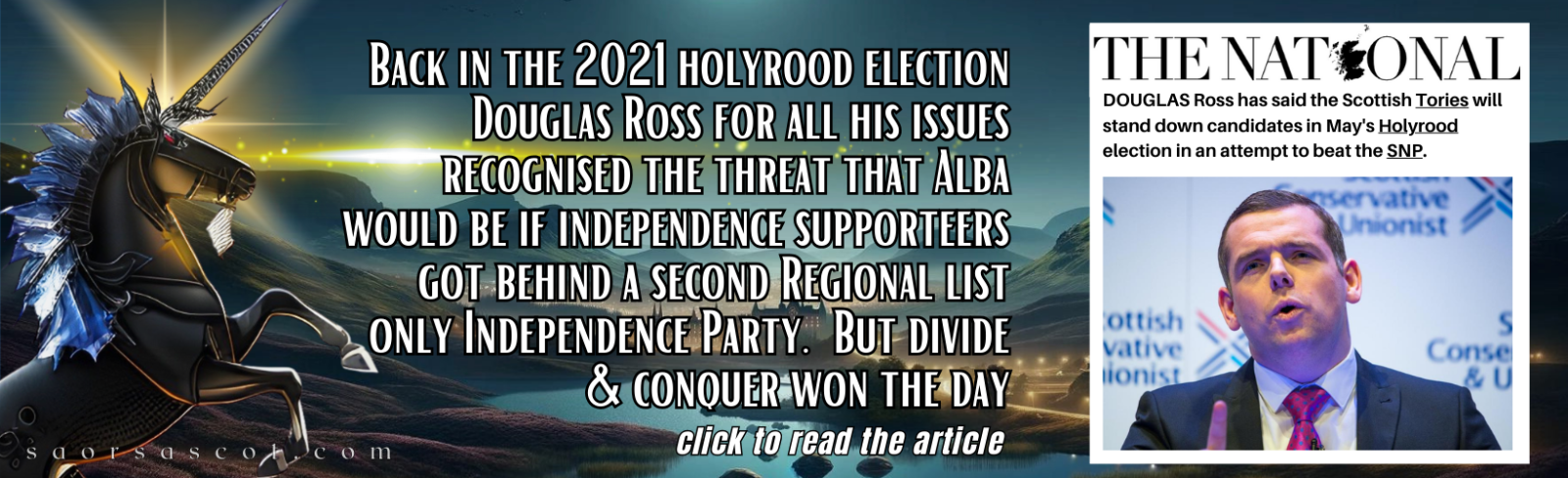
Unionists as Opposition vs. Independence Majority
The struggle for Scottish independence is not only a battle for political sovereignty but also a fight for the soul and future direction of our nation. In the Scottish Parliament, the composition of opposition parties has profound implications for the legislative agenda and the broader political landscape. This section delves into the crucial difference between having unionist parties as the main opposition versus securing an overwhelming independence majority. It explores the benefits of a pro-independence government, the contrast in priorities, and the strategic advantages of minimizing unionist influence.
Having unionist parties as the main opposition in Holyrood presents significant challenges to the independence movement. Unionist parties, by their very nature, oppose the idea of Scottish independence and are committed to maintaining Scotland’s status within the United Kingdom. When these parties dominate the opposition, they can use their platform to undermine and obstruct pro-independence initiatives. This obstructionism can take many forms, from legislative filibustering to media campaigns aimed at discrediting the independence movement. The presence of a strong unionist opposition ensures that every pro-independence policy faces fierce resistance, making it harder to achieve meaningful progress.
On the other hand, an independence majority in Holyrood brings numerous benefits that extend beyond the mere numbers. A pro-independence majority can set the legislative agenda without the constant threat of unionist derailment. With a united front, the Scottish Parliament can focus on policies that promote social justice, economic prosperity, and environmental sustainability – all within the framework of a future independent Scotland. This majority allows for bold and visionary policymaking, unencumbered by the need to appease unionist detractors.
The contrast between a pro-independence government and a unionist opposition is stark. While the former is dedicated to realizing the aspirations of a sovereign Scotland, the latter is invested in maintaining the status quo. Pro-independence parties prioritize policies that enhance Scotland's autonomy and prepare the nation for eventual self-governance. This includes measures to bolster the economy, improve public services, and assert Scotland’s presence on the international stage. In contrast, unionist parties often prioritize policies that align with Westminster’s interests, which may not always reflect the best interests of the Scottish people. This fundamental difference in priorities highlights the importance of minimizing unionist influence in Holyrood.
An independence majority is better positioned to defend and promote Scottish interests effectively. With a unified pro-independence front, the Scottish Parliament can present a coherent and compelling case for independence both domestically and internationally. This unity strengthens Scotland’s negotiating position and demonstrates to the world that the desire for independence is not a fringe movement but a mainstream aspiration supported by the majority of Scots. A strong pro-independence majority can also push back against Westminster's attempts to curtail Scotland’s powers, ensuring that devolved matters remain under Scottish control.
Furthermore, a robust independence majority reduces the risk of unionist sabotage or delaying tactics. Unionist parties, if given the chance, will use every tool at their disposal to slow down or halt the march towards independence. They may attempt to sow division within the pro-independence camp, exploit procedural loopholes, or launch public relations campaigns to sway public opinion against independence. By securing a decisive majority, pro-independence parties can mitigate these risks, ensuring that the path to independence remains clear and unimpeded.
The composition of opposition parties in Holyrood has far-reaching implications for the independence movement. A parliament dominated by unionist opposition poses significant obstacles to the realization of an independent Scotland. In contrast, an overwhelming independence majority allows for a proactive and unified approach to governance, free from the constant threat of unionist interference. It empowers the Scottish Parliament to set a progressive legislative agenda, defend Scottish interests, and minimize the risk of unionist sabotage. As we strive for independence, it is imperative that we build and maintain a strong pro-independence majority in Holyrood, ensuring that the voices of those who seek a sovereign Scotland are heard loud and clear.
Is political Hegemony more important than Independence?
In political theory, hegemony refers to the dominance of one group or ideology over others, often leading to the marginalization of diverse perspectives. This concept is particularly relevant in the context of the Scottish independence movement, where the Scottish National Party (SNP) has long been the dominant force. While the SNP's leadership has undoubtedly been instrumental in advancing the cause of independence, it is worth questioning whether maintaining SNP dominance is more important than achieving the ultimate goal of Scottish independence. The emphasis should be on independence itself, not on the political hegemony of any single party.
Supporting multiple pro-independence parties, such as the Greens and Alba, can represent a broader spectrum of the electorate. Political diversity within the independence movement strengthens its democratic legitimacy, ensuring that a wider range of voices and perspectives are heard. This inclusivity is crucial in building a robust and resilient movement that can withstand the challenges and obstacles that lie ahead. A movement that is seen as inclusive and representative is more likely to gain the trust and support of the broader population, increasing its chances of success.
Encouraging multiple voices within the independence movement also brings diverse perspectives and innovative solutions to the table. Different parties and groups can address a wider range of issues, creating a more comprehensive platform that resonates with a broader audience. For instance, while the SNP has a strong track record on economic and constitutional matters, the Greens bring valuable insights on environmental and social justice issues. Similarly, Alba focuses on promoting a more radical approach to independence, pushing for a faster and more decisive break from the UK. By incorporating these diverse perspectives, the independence movement can develop a more holistic and compelling vision for Scotland's future.
Examples from other independence movements around the world illustrate the importance of unity and diversity in achieving success. In the case of Catalonia, the independence movement has been characterized by a coalition of parties and groups with different ideologies and priorities, but united by the common goal of independence. This diversity has allowed the movement to appeal to a wider range of people and build a broad-based coalition of support. Similarly, the independence movements in Quebec and the Basque Country have also benefited from the involvement of multiple parties and groups, each bringing their unique strengths and perspectives to the table.
Focusing on the shared goal of independence, rather than party dominance, leads to stronger outcomes. When the emphasis is on independence itself, it becomes easier to set aside differences and work together towards the common objective. This collaborative approach fosters a spirit of unity and solidarity, which is essential in building a resilient and effective movement. By prioritizing the goal of independence, the movement can overcome internal divisions and present a united front against external challenges and opposition.
In conclusion, the quest for Scottish independence should not be about maintaining the political hegemony of any single party, but about achieving the ultimate goal of independence. Supporting multiple pro-independence parties can represent a broader spectrum of the electorate, strengthen democratic legitimacy, and bring diverse perspectives and innovative solutions to the table. Examples from other independence movements demonstrate that unity and diversity are key to success. By focusing on the shared goal of independence and prioritizing collaboration and inclusivity, the Scottish independence movement can build a stronger and more resilient campaign, ultimately leading to a successful outcome.
Politics only begins in Scotland with Independence
The journey toward Scottish independence is a pivotal moment, one that has the potential to transform the political landscape and invigorate true political debate and diversity. While the immediate focus is on securing independence, it is crucial to understand that achieving this goal is just the beginning. Post-independence politics will offer a new beginning for Scotland, where the flourishing of diverse political debates and the emergence of varied perspectives will shape the future governance of the nation.
Securing independence is akin to opening a new chapter in Scotland’s political history. The current political environment, dominated by the constitutional question, often overshadows other critical issues. This singular focus can limit the scope of political debate, as parties and politicians are frequently defined by their stance on independence rather than their policies on health, education, or the environment. Post-independence, this dynamic will shift dramatically. Political debate will no longer be tethered to the question of independence but will instead revolve around the policies and visions that will build Scotland’s future. This shift will create a fertile ground for political diversity to flourish, allowing parties to present their distinct agendas and solutions to the electorate.
Achieving independence is not an end in itself but the starting point for a profound transformation in governance. Once independence is secured, the real work of shaping Scotland’s political, social, and economic structures begins. This period of nation-building offers an unparalleled opportunity to design a political system that truly reflects the values, aspirations, and priorities of the Scottish people. Voters are encouraged to think long-term about the kind of political environment they want post-independence. This involves envisioning a Scotland where policy discussions are rich, nuanced, and focused on the common good, rather than being perpetually centered on the constitutional status of the country.
Post-independence, political parties will have the freedom to compete on policy rather than constitutional status. This competition will be healthy and productive, driving parties to develop robust, well-thought-out policies to address the needs and concerns of the electorate. Parties will have the opportunity to distinguish themselves based on their approaches to healthcare, education, environmental protection, and economic development, among other issues. This shift will enhance the quality of political discourse, ensuring that the best ideas rise to the forefront and that governance is driven by merit and innovation.
Independence also presents Scotland with a unique opportunity to design a political system that reflects its unique values and priorities. Scotland can draw inspiration from other nations but is not bound to replicate any existing model. Instead, it can create a system that embodies its commitment to social justice, environmental sustainability, and democratic participation. This could include exploring proportional representation to ensure fairer representation, establishing mechanisms for greater citizen involvement in decision-making, and creating institutions that are transparent and accountable. The goal is to build a political system that not only addresses the present needs of the nation but is also resilient and adaptable to future challenges.
Furthermore, post-independence, Scotland can reaffirm its commitment to inclusivity and diversity, ensuring that all voices are heard and represented in the political arena. This includes marginalized and underrepresented groups who have historically been excluded from mainstream political discourse. By fostering an inclusive political culture, Scotland can create a governance system that is truly reflective of its diverse population, promoting equity and justice for all citizens.
In conclusion, achieving independence is just the beginning of a transformative journey for Scotland. Post-independence politics will offer a new beginning, where true political debate and diversity can flourish. By thinking long-term about the political environment, encouraging competition based on policy, and designing a political system that reflects Scotland’s unique values, the nation can build a future that is equitable, inclusive, and prosperous. This new beginning will not only enhance the quality of governance but will also empower the Scottish people to shape their own destiny.